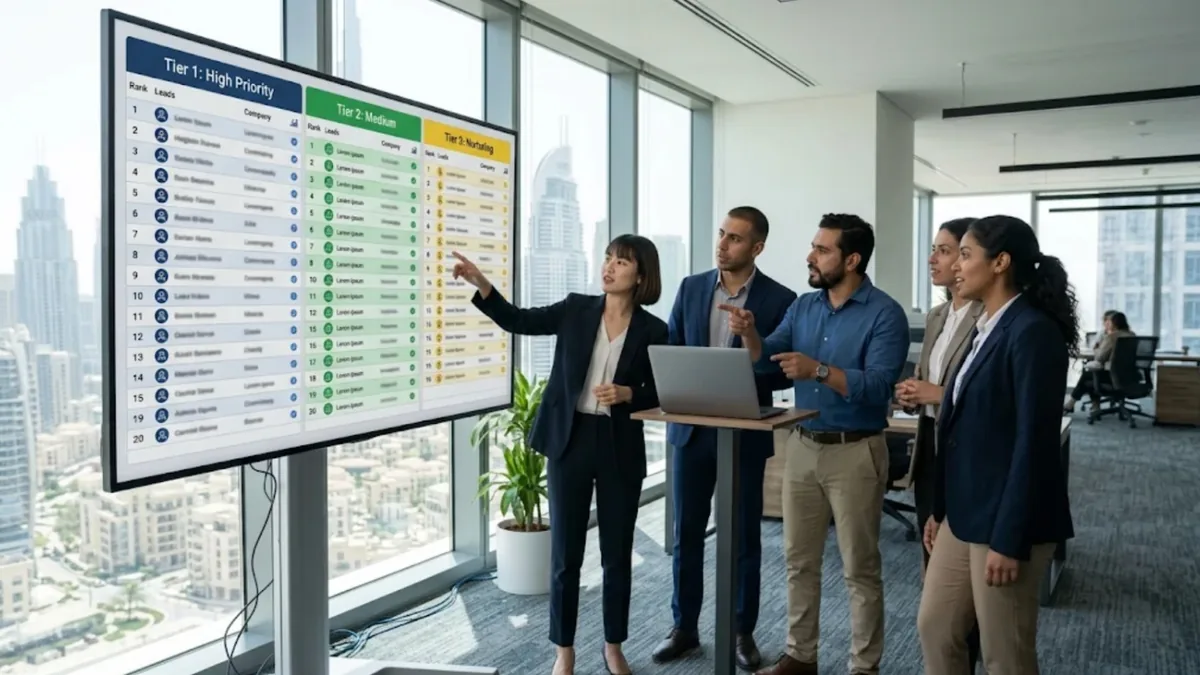
Every sales leader has lived this story. The champion loved the demo, the pilot went well, the proposal was "with procurement" — and then the champion changed jobs, or the CFO who never joined a call asked a single question nobody had answered. The deal didn't lose to a competitor. It lost to a buying committee the rep never actually met.
Multithreading — building real relationships with several stakeholders in the same account — is the oldest fix for single-threaded risk. What has changed in 2026 is that AI can now do most of the mapping, monitoring and follow-up work that used to make multithreading too slow to do consistently. This guide shows how to map a buying committee with AI, how to decide which threads matter, and how to keep them warm without spamming an entire org chart.
Why single-threaded deals fail more often
B2B buying committees have kept growing. Depending on the study and deal size, estimates now range from six to ten people for a typical mid-market purchase to eleven or more for enterprise software. Each of them can delay or veto. Vendor research on won and lost deals consistently shows the same pattern: deals with four or more engaged stakeholders close at roughly double the rate of single-contact deals, and the gap widens for larger contracts. Treat the exact multipliers as directional — but the direction has been the same in every dataset we have seen.
Single-threaded deals fail for three predictable reasons:
- Champion risk: your one contact leaves, gets reassigned or simply goes quiet.
- Hidden objections: security, finance or legal raise concerns late, when you have no relationship to address them.
- Weak consensus: the champion cannot sell internally without proof tailored to each stakeholder's priorities.
The roles you are actually mapping
| Role | Typical titles | What they care about | Proof that moves them |
|---|---|---|---|
| Economic buyer | CFO, VP Finance, CEO, BU head | ROI, budget timing, risk | Business case, payback period, references |
| Champion | Manager or director who owns the problem | Solving the pain, looking good internally | Internal pitch deck, quick wins |
| Technical evaluator | IT, RevOps, data/security lead | Integration, security, maintenance | Architecture docs, security answers, sandbox |
| End users | SDRs, AEs, CSMs, operators | Ease of use, less busywork | Hands-on trial, peer stories |
| Approvers / blockers | Legal, procurement, compliance | Terms, data processing, vendor risk | DPA, standard contract, certifications |
| Influencers | Advisors, adjacent team leads | Impact on their team | Short tailored summary |
How AI maps the buying committee
Step 1: Define the committee your deal requires
Before AI finds a single contact, write down which roles must say yes for this type of purchase. A $15k tool may need a champion, a budget holder and IT. A $250k platform adds security, legal, procurement and often an executive sponsor. This "required roles" template per deal size is what the AI fills in.
Step 2: Reconcile what you already know
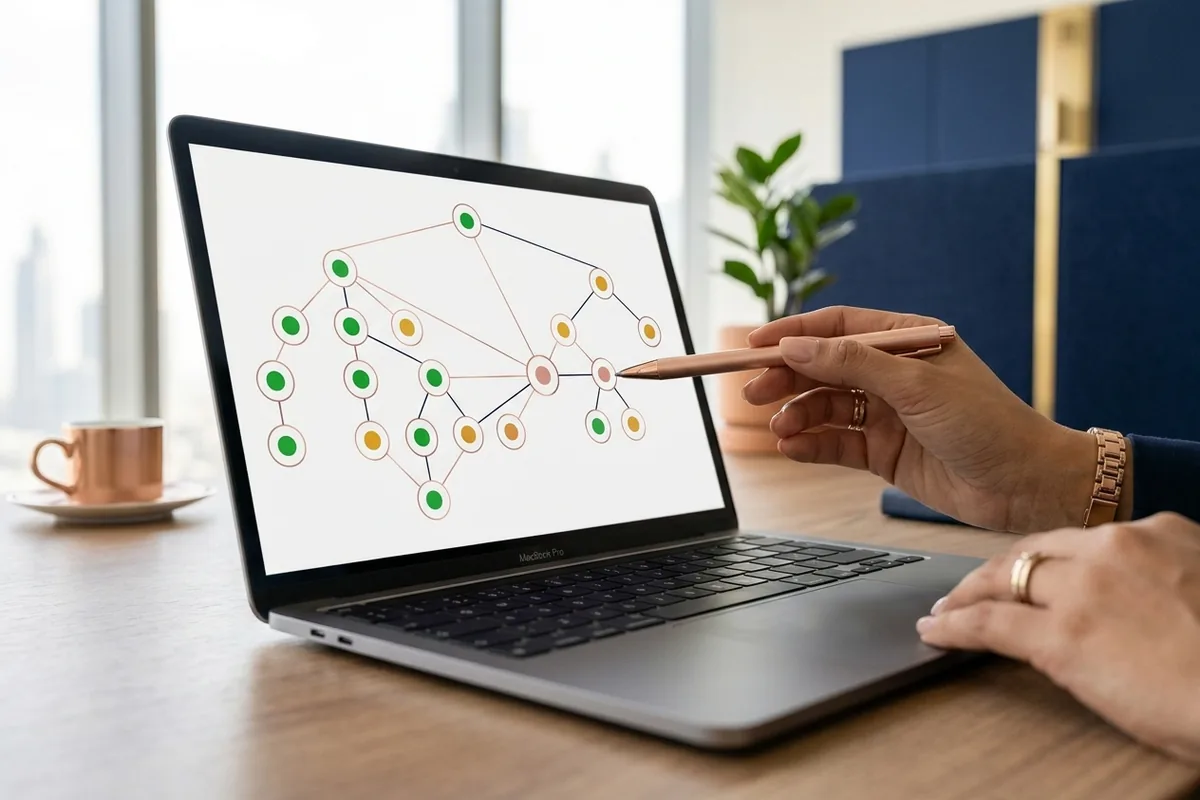
AI scans the CRM, email threads, meeting transcripts and calendar invites to list every person from the account who has interacted with you — and classifies each by likely role, seniority and sentiment. This is usually the biggest surprise: reps routinely have five or six contacts in the account who appear in CC lines or one call, but never in the deal record. If your CRM is messy, an agent that cleans and enriches it first pays for itself — see how AI agents work with a messy CRM.
Step 3: Find the missing roles
For empty slots, enrichment data and public sources suggest likely people: the head of security, the procurement lead, the finance owner for that business unit. AI ranks suggestions by fit and confidence. A human must verify each one — titles on professional profiles are often out of date, and the wrong "CFO" outreach damages credibility.
Step 4: Score coverage and risk
The deal now gets a committee coverage score: which required roles are engaged, which are known but cold, and which are missing. The most useful flag is imbalance — for example, twelve emails with the champion and zero contact with the economic buyer, three weeks before the expected close date. This is exactly the kind of signal an AI deal review should surface every week.
Step 5: One coordinated next action per role
Instead of blasting every stakeholder with the same sequence, AI drafts a specific next step for each missing or cold role, routed through the right person: an intro request through the champion, a finance-ready ROI one-pager for the CFO, security documentation for IT. The rep approves and sends.
Multithreading without spamming the account
- Go through the champion first. Ask for introductions and give them a ready-made forward message. Going around a champion without warning burns trust.
- Tailor by role, not by persona template. AI can personalise using what each stakeholder has actually said or published — but the message must be about their priority, not your feature list.
- Use signals to time outreach. A new security lead joining, a budget cycle starting, or a stakeholder visiting your pricing page are natural moments to engage — see signal-based selling.
- Cap the touches. Set a per-account limit across all reps and sequences so the company does not receive eight cold emails in one week.
- Bring your own exec. For large deals, AI can recommend which of your executives should connect with theirs, and draft the note.

What a multithreaded deal looks like in practice
A 300-person logistics company is evaluating an AI sales platform. Initially, the rep has one contact — the Head of Sales, who loved the demo. The AI committee map shows: economic buyer (CFO) not engaged; IT lead joined one call but asked about SSO and never got an answer; procurement unknown; two sales managers who will actually use the tool were never contacted.
The coordinated plan: the champion introduces the CFO with a one-page payback model; IT receives the SSO and data-processing answers the same day; the two sales managers get a hands-on trial; procurement gets the standard contract and DPA early, before they ask. Three weeks later, five stakeholders are engaged, the security question is closed, and the deal doesn't stall when the champion goes on annual leave.
Metrics to track
| Metric | Why it matters | Healthy target |
|---|---|---|
| Engaged stakeholders per opportunity | Direct proxy for deal resilience | 3+ mid-market, 5+ enterprise |
| Required-role coverage | Shows gaps, not just volume | 100% of required roles known by proposal stage |
| Economic buyer engaged before proposal | Strongest predictor of on-time close | Yes on every deal above your threshold |
| Days since last touch per role | Catches threads going cold | Under 14 days in active stages |
| Win rate by thread count | Proves the impact to your own team | Review quarterly |
Common mistakes
- Counting contacts instead of roles — five end users don't replace one economic buyer.
- Trusting AI role inferences without verification.
- Sending generic sequences to every stakeholder.
- Multithreading only when the deal is already in trouble, instead of from discovery.
- Keeping the committee map outside the CRM, where managers and the next rep can't see it.
Multithreading has always been the difference between forecastable and fragile pipelines. AI doesn't replace the relationships — it removes the research, tracking and drafting that made reps skip them. ROSA's AI sales agents map buying committees, flag single-threaded deals and draft role-specific outreach for your team to approve.
Frequently asked questions
What is multithreading in B2B sales?
It is building relationships with multiple stakeholders in the same account — such as the champion, economic buyer, technical evaluator and procurement — so that a deal doesn't depend on a single contact.
How many stakeholders should a B2B deal have?
It depends on deal size and complexity, but at least three engaged stakeholders for mid-market deals and five or more for enterprise deals is a good benchmark. What matters most is covering every role that must approve.
How does AI help map a buying committee?
AI reconciles contacts from CRM, email and meetings, classifies them by likely role, suggests missing stakeholders from enrichment data, scores coverage and drafts role-specific next actions for the rep to approve.
Is it risky to contact stakeholders above my champion?
It can be if you go around them. Ask the champion for introductions first, give them a ready-to-forward message, and keep them informed about every new thread.
Which metric best shows multithreading is working?
Track win rate and sales-cycle length by number of engaged stakeholders, plus whether the economic buyer was engaged before the proposal stage.