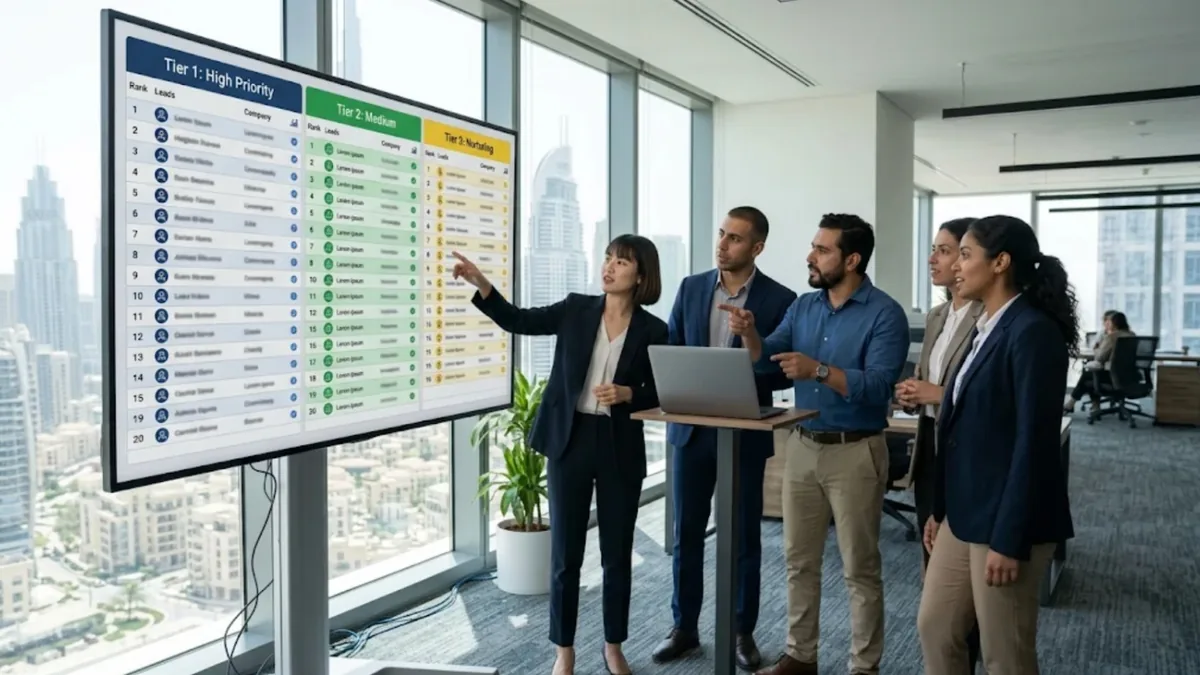

Every sales leader has had the same quarter-end conversation. A deal that sat at 80% for six weeks slips, and when you look back the warning signs were all there: the champion stopped replying in week three, nobody from procurement ever joined a call, and the last mutual plan was written by your rep, not the buyer. Deal reviews exist to catch exactly this, and they usually fail because they rely on asking a rep how confident they feel. AI deal review changes the input: instead of opinion, it reads what actually happened in the account.
What a deal review is really trying to find
Not "is this deal good". It is trying to answer three narrower questions, and most review meetings only get to the first one.
| Question | Traditional answer | What evidence would show |
|---|---|---|
| Will it close? | Rep's confidence percentage | Activity pattern versus deals that actually closed |
| Will it close this quarter? | The date in the CRM | Whether the buyer's own steps are on a timeline |
| What would change the outcome? | "I'll chase them" | The specific missing stakeholder, step or document |
The third question is the only one that creates value in the meeting. AI is useful because it frees the time usually spent extracting the first two.

The signals that predict slippage
These are consistent enough across pipelines to be worth monitoring automatically.
- Single-threading. One contact, however enthusiastic, is the most common cause of a deal dying quietly. Count distinct engaged people, not contacts in the CRM.
- Response latency drift. Replies that used to take four hours now take three days. The absolute number matters less than the change.
- Rep-driven momentum. If every meeting was booked by your rep and every document written by your side, the buyer is being carried, not buying.
- No procurement or legal contact late in the cycle for a deal size that always needs them.
- Stage without substance. A deal marked Negotiation where no pricing has been sent.
- Date pushed more than once. The second push predicts a third far more reliably than the first predicts a second.
- Silence after a pricing discussion, which usually means an internal conversation you are not in.
Where AI is genuinely better than a manager
- Coverage. A manager can meaningfully review maybe fifteen deals a week. AI can read every open deal every day.
- No recency bias. It weighs week two the same as yesterday; humans do not.
- Cross-deal comparison. It can compare this deal's pattern to the shape of deals that closed, which no manager holds in their head accurately.
- Reading the actual record. Emails, meeting notes and calendar activity, rather than the rep's summary of them. See AI agents and messy CRMs.
- Consistency. The same standard on a Friday afternoon as a Monday morning.
Where it is worse, and stays worse
- Context it cannot see. The buyer's budget freeze, the reorganisation, the fact that your champion is leaving. Reps know things the record does not contain.
- Unusual but winnable deals. Pattern matching punishes anything that does not look like last quarter. Some of your best deals will be flagged as at risk.
- Cause versus correlation. It can tell you single-threaded deals close less often. It cannot tell you that threading this particular deal will help.
- Judging the fix. Deciding whether to escalate to an exec, discount, or walk away is a human call with reputational stakes.
The failure mode worth naming: a risk score that reps learn to game. Once people know that logging three contacts improves the score, three contacts get logged. Score the evidence, not the fields.

Running the review differently
- AI reviews everything before the meeting and produces a short flag list per deal: what is missing, what changed, what it would ask.
- Reps see their flags first and resolve the easy ones. Half the flags are stale data, and fixing those outside the meeting is the biggest time saving available.
- The meeting covers only unresolved flags and the deals where the AI and the rep disagree. Disagreement is the most informative signal in the whole process.
- Each flagged deal leaves with one specific action and an owner. "Get procurement on the next call by Thursday", not "build the relationship".
- Next week starts by checking last week's actions. Without this the review becomes theatre.
A practical note: run this weekly, not at quarter end. A deal flagged in week two can be saved; the same flag in the final week is just a more accurate forecast.
What to measure
- Flag precision: of deals flagged at risk, how many actually slipped. If it is under half, the flags are noise and reps will ignore them.
- Caught-and-saved rate: flagged deals where action was taken and the deal still closed. This is the number that justifies the process.
- Forecast accuracy before and after, measured at the same point in the quarter. See AI sales forecasting.
- Time spent in review meetings. It should go down, not up.
- Stakeholder count per deal, since single-threading is the risk you can most directly act on.
Before you buy a tool
Most of the value here comes from data hygiene rather than the model. If your CRM does not capture email and meeting activity automatically, an AI deal review will analyse a record that reflects what reps remembered to log, which is the same problem you started with. Fix the capture first.
Then start manually. Pick the five signals above that match how your deals actually fail, and have someone check them across the pipeline for two weeks. If that produces useful conversations, automate it. If it does not, a tool will not rescue it.
For the wider stack, see implementing AI in B2B sales; for keeping deals multi-threaded in the first place, ABM with AI agents covers the account side.