
AI has made it trivial to write a thousand personalised-looking cold emails in an afternoon, and that is exactly why most of them now land in spam or get ignored. Buyers recognise templated "I noticed your company…" openers, and mailbox providers have tightened rules for bulk senders. AI email outreach still works, but only when it is used to find better reasons to write, not just to write more. This guide covers how AI email outreach works, the deliverability basics you cannot skip and a practical workflow for B2B sales teams.
What AI does well in email outreach
| Task | Where AI helps | Where humans still matter |
|---|---|---|
| Research | Summarising company news, hiring, funding, tech stack | Choosing which accounts are worth the effort |
| Personalisation | Drafting a first line tied to a real signal | Checking the signal is accurate and relevant |
| Copy variations | Testing subject lines and angles | Defining the offer and positioning |
| Reply handling | Classifying replies, answering simple questions, booking meetings | Complex objections and negotiation |
| Follow-up | Timing and sequencing based on engagement | Deciding when to stop |

Deliverability comes first
The best email fails if it never reaches the inbox. Common practices recommended by deliverability practitioners include:
- Do not send cold outreach from your primary company domain; use separate, properly configured sending domains.
- Set up SPF, DKIM and DMARC on every sending domain.
- Warm up new mailboxes gradually before sending campaigns, and keep daily volume per mailbox modest.
- Verify email addresses before sending to keep bounce rates low.
- Include a clear way to opt out and honour it immediately.
- Watch spam complaint rates; major mailbox providers expect bulk senders to keep them very low.
AI cannot fix a damaged sender reputation. Treat volume as something you earn, not something the tool gives you.
A practical AI outreach workflow
- Start with a narrow list: one industry, one role, one problem you solve. Small, targeted campaigns usually outperform large generic ones.
- Collect real signals: new funding, hiring for sales roles, a product launch, a website visit or a visitor identified on your site.
- Let AI draft, then review: one specific first line, one sentence on the problem, one clear ask. Review the first batches by hand.
- Keep sequences short: three to four touches spaced over two to three weeks; see sales follow-up automation.
- Respond fast: when someone replies, answer in minutes, not days. Speed to lead applies to outbound replies too.
- Qualify and book: route interested replies through clear qualification rules and offer meeting times directly.
Mistakes that kill AI outreach
- Fake personalisation, such as praising a "recent post" the prospect never wrote.
- Long emails that read like a brochure.
- Sending the same AI-written angle to every role in the company.
- Following up eight times with "just bumping this".
- Measuring opens instead of replies and meetings; open tracking is unreliable today.
Metrics to track
- Bounce rate and spam complaints (health).
- Positive reply rate (relevance).
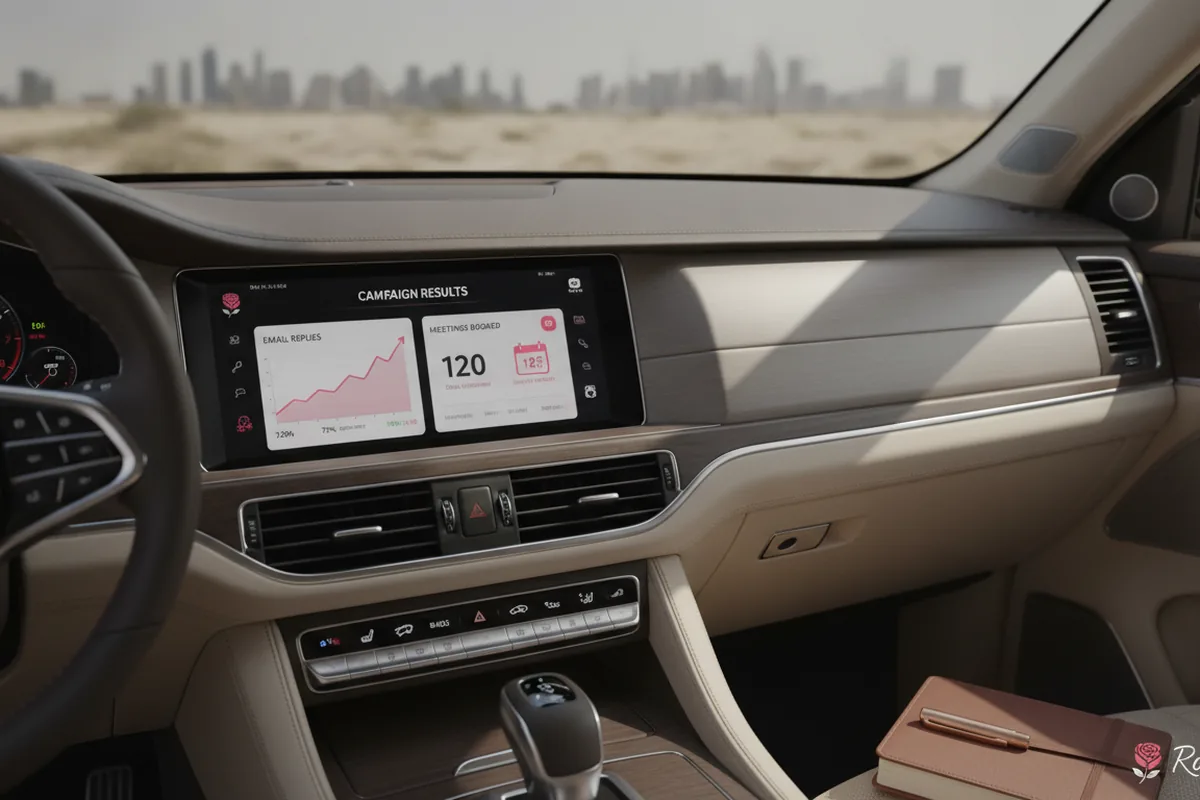
- Meetings booked per 100 contacts (outcome).
- Pipeline created from outreach (business value).
Rosa's AI sales agent handles the part most teams struggle with after the send: replying to prospects instantly, qualifying them and booking meetings, while your team focuses on the conversations that matter. You can start a trial on one campaign and measure meetings booked.
Frequently asked questions
Does AI cold email still work?
Yes, when it is targeted and based on real signals. Generic AI-written emails at high volume usually hurt deliverability and get few replies.
How many cold emails can I send per day?
Keep volume per mailbox modest and increase it gradually after warm-up. Exact limits depend on your domain reputation and provider.
Should I use my main domain for cold email?
Most practitioners advise against it, so that any reputation problems do not affect your normal company email.
What is a good reply rate for cold email?
It varies widely by market and list quality. Focus on positive replies and meetings booked rather than chasing a benchmark.
Can AI answer replies to outreach emails?
Yes. AI agents can answer common questions, qualify interest and propose meeting times, handing complex conversations to a human.