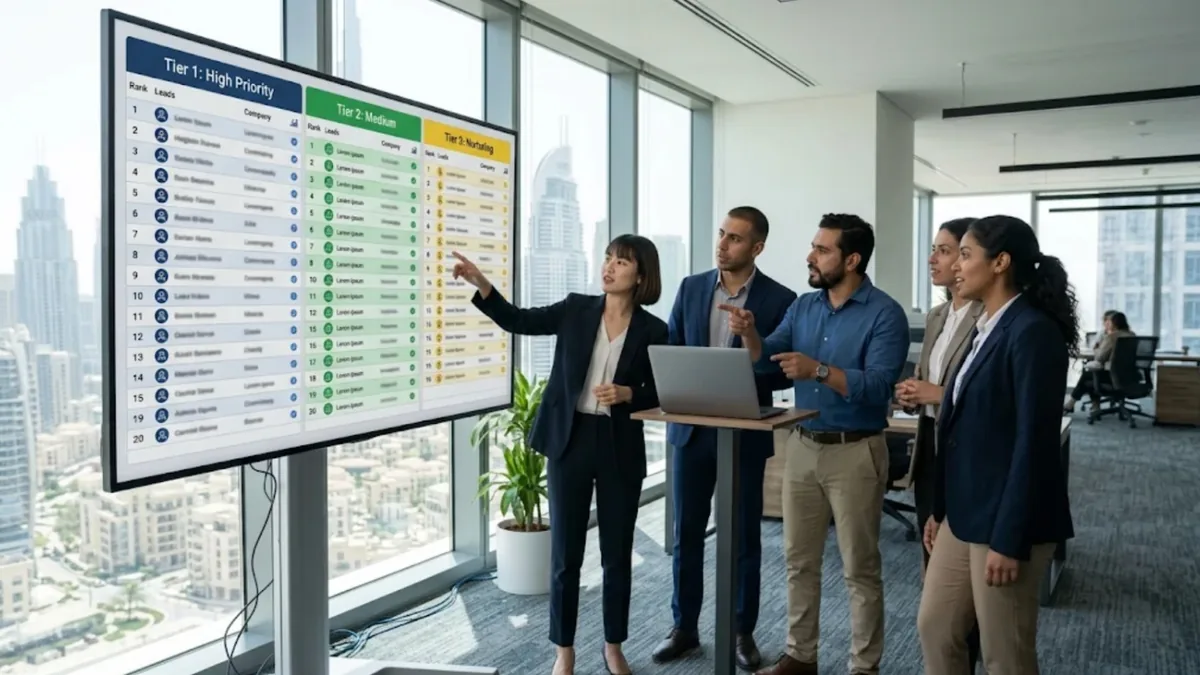
Inbound leads are the most valuable leads a B2B company gets: they found you, they raised their hand, and they are often actively evaluating solutions. Yet many companies still take hours or days to respond. Research on lead response, starting with the widely cited Harvard Business Review study on online lead response, has repeatedly found that companies contacting leads within the first hour are far more likely to qualify them than those who wait longer, and the gap grows with every hour. In 2026, buyers expect answers in minutes. AI makes instant, relevant response possible around the clock. This guide explains how to build an AI-powered inbound sales process that wins on speed without sacrificing quality.
Why speed-to-lead matters
- Intent decays fast: the buyer is most engaged at the moment they submit a form or start a chat.
- Competitors are one click away: buyers often contact several vendors at once; the first useful response sets the agenda.
- Time zones: leads arrive outside office hours, especially for companies selling internationally.
Where inbound processes slow down
| Bottleneck | Typical delay | AI fix |
|---|---|---|
| Form goes to a shared inbox | Hours | Instant personalised reply and routing |
| Manual research before contact | Hours to a day | Automatic enrichment of company and role |
| Manual qualification calls | Days | Conversational qualification by AI |
| Calendar back-and-forth | Days | Direct booking in the right rep's calendar |
| After-hours leads | Until next business day | 24/7 AI response |

Building an AI inbound process
1. Capture everywhere
Website forms, chat, demo requests, content downloads, email and messaging channels all feed one system. Anonymous visitors can be identified at company level; see website visitor identification.
2. Respond in seconds
The AI replies immediately with something useful: an answer to the question asked, a relevant case study, or available meeting times. Not a generic "thanks, we'll be in touch".
3. Enrich and qualify
The AI enriches the lead with company size, industry and role, then asks a few qualifying questions in conversation. Our guide to AI lead qualification covers the framework.
4. Route and book
Qualified leads are routed to the right rep by territory, segment or product and can book directly. High-value leads trigger an instant alert to the rep.
5. Nurture the rest
Leads that are not ready enter a personalised nurturing track instead of being dropped; see AI lead nurturing.

Keep it human where it counts
- Be transparent that the first response is from an AI assistant.
- Hand over to a person quickly for complex questions, enterprise deals and anything sensitive.
- Give reps a full summary so the buyer never repeats themselves.
Metrics to track
| Metric | Target direction |
|---|---|
| Median time to first response | Seconds to minutes |
| Time to first meeting booked | Same day where possible |
| Inbound lead to meeting rate | Up |
| Meeting to opportunity rate | Stable or up (quality check) |
| After-hours lead conversion | Up |
Common mistakes
- Fast but useless auto-replies that do not answer the buyer's question.
- Too many qualifying questions before offering value.
- No owner for escalations, so hot leads still wait.
- Measuring response time but not meeting and pipeline outcomes.
Rosa's AI sales agent answers inbound leads in seconds, qualifies them, books meetings and hands warm leads to your team with full context. Start a free trial.
Frequently asked questions
What is speed-to-lead?
The time between a lead's inquiry and your first meaningful response. Shorter speed-to-lead strongly correlates with higher qualification and conversion rates.
How fast should we respond to inbound leads?
Within minutes if possible, and certainly within the first hour. AI makes instant response feasible 24/7.
Will buyers accept an AI first response?
Yes, when it is useful, transparent and offers easy access to a human. Buyers value fast, relevant answers.
Does AI replace inbound SDRs?
It takes over first response, enrichment, basic qualification and scheduling, letting SDRs and AEs focus on conversations with qualified buyers.
How do we measure success?
Track response time, meeting booked rate, meeting-to-opportunity rate and pipeline from inbound leads, comparing before and after AI.